
Difference Between Power of Attorney and Enduring Power of Attorney in Australia
Choosing between a Power of Attorney and an Enduring Power of Attorney in Australia is essential for long‑term financial protection. This guide explains how each document works, when they apply, and why an EPOA provides critical support if you lose the capacity to make decisions.
Planning for the future involves more than writing a will. It also means preparing for situations where you may not be able to manage your own legal or financial affairs. In Australia, two important legal documents allow you to appoint someone to act on your behalf – a Power of Attorney (POA) and an Enduring Power of Attorney (EPOA).
Although both documents give authority to another person to make decisions for you, they serve different purposes and apply in different circumstances. Understanding the difference between a Power of Attorney and an Enduring Power of Attorney can help ensure that your finances, assets and personal interests are protected when it matters most.
In this article, we explain the key differences between these two legal tools, how they work, and when each may be appropriate.
Understanding Power of Attorney and Enduring Power of Attorney
A Power of Attorney has long been an important estate planning tool. Through this legal document, you – known as the Principal – appoint a trusted person (called the Attorney) to manage certain decisions or financial matters on your behalf.
The person you appoint must generally be over 18 years old and someone you trust to act responsibly and in your best interests.
However, there are two main forms of Power of Attorney:
- General Power of Attorney
- Enduring Power of Attorney
While both provide authority to another person to act on your behalf, the key difference lies in what happens if you lose mental capacity.
What is the Difference Between Power of Attorney and Enduring Power of Attorney?
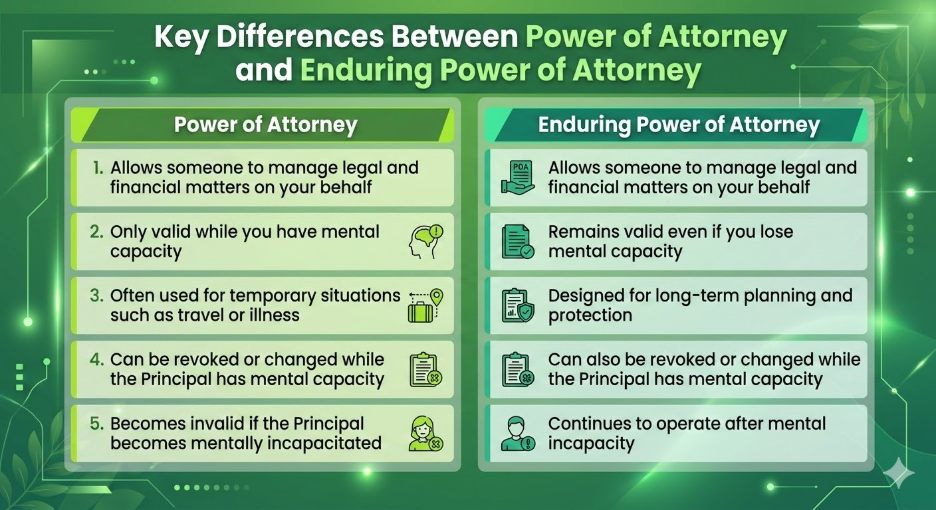
The primary difference between a Power of Attorney and an Enduring Power of Attorney is how they operate if you become unable to make decisions for yourself.
- A General Power of Attorney only works while you still have mental capacity. If you lose the ability to make decisions due to illness, injury, or cognitive decline, the document automatically becomes invalid.
- An Enduring Power of Attorney, however, continues to remain valid even after you lose mental capacity. This ensures someone you trust can continue managing your financial affairs if you are no longer able to do so.
It’s also important to note that both documents become invalid upon your death. At that point, the Executor named in your Will becomes responsible for managing and administering your estate.
What is a General Power of Attorney?
A General Power of Attorney allows an appointed person to manage your legal and financial matters on your behalf for a specific period of time or for specific tasks.
For example, someone may appoint a General Power of Attorney if they:
- Are travelling overseas for an extended period
- Are temporarily ill or recovering from surgery
- Need assistance managing property, banking, or investments
- Require someone to sign documents or vote at meetings on their behalf
The authority given under a General Power of Attorney may include managing:
- Bank accounts
- Property transactions
- Investments or shares
- Business matters
- Financial agreements
However, a General Power of Attorney cannot make decisions about your health or lifestyle. Those decisions are typically handled through other legal arrangements such as an Enduring Guardian or medical directive, depending on the state or territory.
Another critical limitation is that a General Power of Attorney automatically ends if you lose mental capacity. This means it cannot provide protection if you develop conditions such as dementia or suffer a serious accident affecting decision-making ability.
What is an Enduring Power of Attorney?
An Enduring Power of Attorney (EPOA) provides similar authority to a General Power of Attorney but with one crucial difference – it continues even if you lose mental capacity.
This means the person you appoint can continue managing your financial affairs if you become unable to make decisions due to:
- Illness
- Injury
- Dementia
- Cognitive decline
- Age-related conditions
Because of the significant responsibility involved, an Enduring Power of Attorney must meet additional legal requirements.
Typically, an EPOA must:
- Clearly state that the authority continues even if the Principal loses mental capacity
- Be signed by the appointed attorney(s) to confirm their acceptance
- Be witnessed by a prescribed witness, often a solicitor or authorised professional
- Include confirmation that the Principal understands the document and its consequences
This document ensures your finances and legal matters can continue to be managed smoothly even during periods of incapacity.
Despite its importance, research suggests only about 11% of Australians have a valid Enduring Power of Attorney in place, leaving many individuals vulnerable if unexpected events occur.
Why Having the Right Power of Attorney Matters
Life can be unpredictable. Illness, accidents or cognitive decline can affect anyone at any stage of life. Without proper legal arrangements in place, family members may need to go through complex and expensive legal processes to gain the authority to manage finances or assets.
By setting up the appropriate Power of Attorney or Enduring Power of Attorney, you can:
- Ensure your financial matters are managed by someone you trust
- Prevent legal disputes within families
- Avoid delays in managing property, investments, or bills
- Protect your long-term financial well-being
Choosing the right person as your Attorney is equally important, as they will have a significant responsibility to act in your best interests.
Get Tailored Advice on Power of Attorney
Understanding the difference between a Power of Attorney and an Enduring Power of Attorney is essential when planning for your future. While a General Power of Attorney can be useful for temporary situations, an Enduring Power of Attorney provides long-term protection if you lose the capacity to make decisions.
Because these legal documents carry significant responsibility and must meet strict requirements, it’s important to seek professional advice before putting them in place.
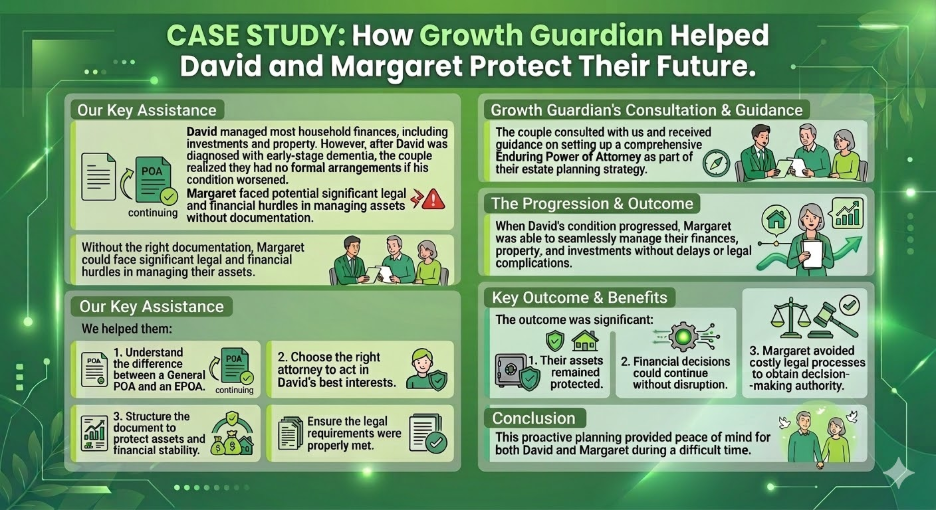
At Growth Guardian, we specialise in helping individuals and families create tailored estate planning strategies – including guidance on appointing the right Power of Attorney.
Our team can help you understand your options, ensure your documents are properly structured, and give you confidence that your financial future is protected.
Date : March 17, 2026
Author : Growth Guardian